Saturday, January 31, 2009

Graduated Filters, Galen Rowell and Ethics

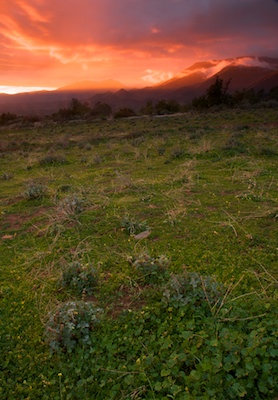
_DSC5885.jpg

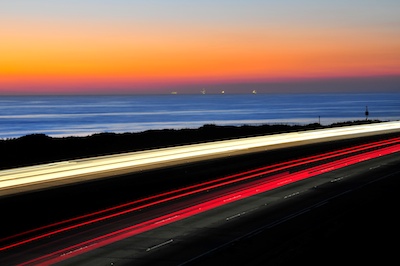
I have been exploring the benefits of shooting with graduated neutral density filters, as in the case of the above shot (Carpenter's Orchard, Ojai, California). These filters had there place when shooting with film, and in many ways they can still be used very effectively. Yet is there a compromise in quality by placing a layer of glass or resin in front of a lens? If you can do it more cleanly in Photoshop, and in some ways it may more closely replicate what the human eye sees, then does the end justify the means?


What is ethical?
1. Multiple exposures then masked to reveal what the photographer saw?
2. multiple versions of the same master, processed for highlights and shadows and then masked in photoshop?
3. Shot with a neutral density filter and left as is? As with Galen Rowell’s work.
4. Shot with a neutral density filter, then without, then painting in a mask to reveal detail otherwise obscured?
5. HDR

Galen Rowell was OK with rescanning an image for highlights in a moon, but it was the same 35 mm frame. Is this discussion moot considering the digital times? Do we use the tools available to us and be happy with the result if it is what we saw and felt? After all, improvements in technology supposedly allow the artist to be more creative. But is this true? The work produced by today’s photographers isn’t necessarily more artistic or sharper for that matter. Artistry with negative film and darkroom processes yielded remarkable results . . . and in many ways these processes are more available to more photographers now. After all, a computer is practically ubiquitous. I don't completely buy the adage that Ansel Adams's work was heavily manipulated and that makes all manipulations OK. I acknowledge that Adams worked creatively with a variety of tools in the darkroom in order that his vision come out in his final prints, but I don't believe that this fact is carte blanche for today's crop of digital photographers and digital darkrooms.

Is disclosure the only concern? If disclosed properly is their no problem? Is the public familiar enough with digital that HDR is OK?

How when you some one asks: ‘is this real, or is it digital?’ Yes! It is digital and it is real. Nothing added an nothing taken away aside from some ‘darkroom’ processing (tone, color, vibrancy).

Is film the benchmark by which all digital work is judged?

I haven’t satisfactorily answered many of these questions for myself, and I have a feeling that I may never actually reach a decisive conclusion. For the time being I am going to keep my mind open and see what the options are. My gut tells me, however, that maintaining a standard is essential in nature and environmental photography. I work hard to make the shots and I don’t want to misrepresent. One of the things that inspires me in photography and the environment is that they are entities vastly larger than myself. What I get out of others appreciating my work is important, but it isn’t the only thing or the most important. Capturing my response to the wilderness is my goal, but not by showing something that was not there."


(Via .)

Wednesday, April 2, 2008

Cumulative Impact

platform2.jpg


Cumulative Impact

Impact upon the environment comes in many forms, and often the impact is profound: an oil spill from a ship that coats the shoreline with a noxious film, the devastation to a region overwhelmed by radiation emitted from a nuclear reactor accident, or the accumulation of factory emissions that kill people as they go about their daily lives.1

Yet just as significant are the small changes and impacts that occur all around us, albeit at a rate and visibility that often warrants little notice. These are the unreported sewage spills that spoil our rivers and render our beaches unsafe for swimming, the oil derricks that sprout up on our wild lands to feed an ever-increasing appetite for petroleum, or the disappearance of a fish species once so numerous that it filled the bays and inlets of the northeast and was the backbone of an economy and culture. We are less apt to respond to incremental changes in our environment; we adapt to and accept our surroundings, sometimes out of necessity. And often we are unaware when we contribute to these very same problems by virtue of the food we buy, the products we consume or the lifestyles we lead.

By turning my lens upon these things I hope to inspire people to take a second look at something that they may have already seen and accepted. I hope to inspire my audience to recognize that these small impacts stack up such that their cumulative impact is greater than the sum of the parts.

At the same time, there is a great deal of beauty and mystery in the natural world and to experience it either directly or indirectly, as through photographs of wild animals, is to feel the stirrings of wonder and awe. These emotions can then lead to appreciation and then, hopefully, an elevated conscientiousness. There are also individuals and groups that demonstrate the positive influence we can have upon one another and the environment, from the local organic farmer supplying produce to local schools to the National Resource Defense Council levying political weight on important issues.

As photographers we play a powerful role in revealing the human impact evident in our communities, our country and our planet. We can instigate a double take in our audience and help others to see the world from a perspective that is both critical and celebratory.

1 Exxon Valdez oil spill, 1989; Cosco Busan oil spill, 2007; Chernobyl reactor failure, 1986; Donora tragedy, Pennsylvania, 1948


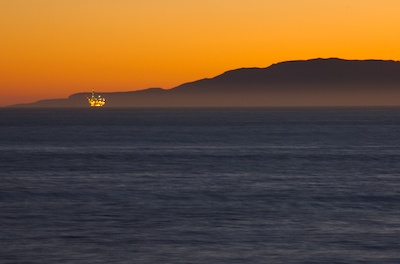
Caption for first image: Offshore oil platform and Santa Cruz Island, California. There are currently 20 offshore oil platforms in the Santa Barbara Channel. 15 are located in federal waters, 1 is located in state waters in Santa Barbara County, and the remaining 4 are in state waters in Ventura County. The federally run Minerals Management Service estimates that there is a 41.2% chance of a 1,000 barrel or greater spill for the next 28 years in this area.* Such spills represent a significant hazard to marine ecosystems, which is of even greater concern considering the proximity of these offshore platforms to Channel Islands National Park, home to several species found nowhere else in the world. (*www.sbck.org)

platform1.jpg


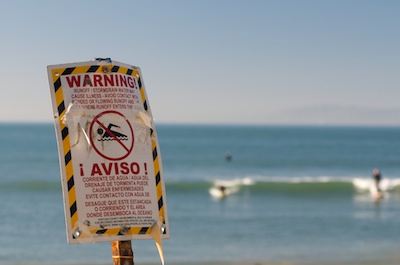
Winter rains in southern California funnel pollutants from urban, agricultural and industrial areas into creeks and rivers, which in turn concentrate pollutants along the coasts. Water quality is often so poor that local environmental health groups advise against entering the water.

_DSC0350_2.jpg


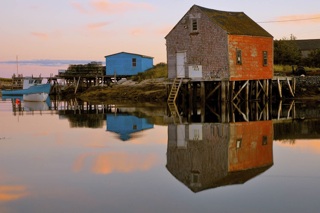
Delapidated fishing stage in Prospect Bay, Nova Scotia. Structures such as these are remnants of a once thriving Atlantic codfish industry. This plight, however, is not unique to Nova Scotia. Around the planet marine species are in massive decline, which is having a resounding impact upon the economies and livelihoods that were based upon a resource previously believed to be inexhaustible.

DSC_0189.jpg


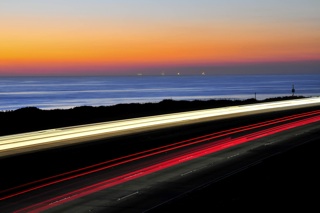
A juxtaposition of three California Icons: the Pacific Ocean, offshore oil platforms and cars. The consequence of our love of oil comes in the form of degraded ecosystems and polluted oceans. Despite the ubiquitousness of these oil platforms on our coastlines, the U.S. imported 59% of its oil in 2006*. Analysts predict that we will import 70% by 2025**. (*www.eia.doe.gov, ** usinfo.state.gov)

_DSC6759.jpg


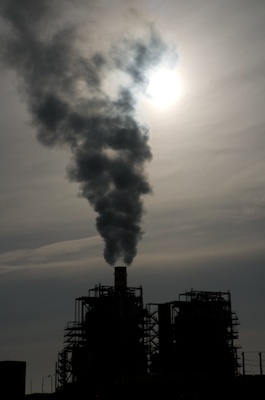
Emissions from the Mandalay Power Plant in Oxnard, California are released into the atmosphere. These include nitrogen oxides and carbon dioxide, although in smaller quantities then those released from coal power plants.

cornworm.jpg


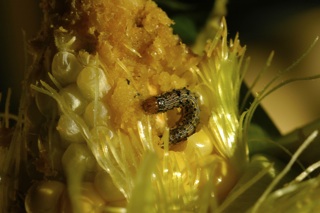
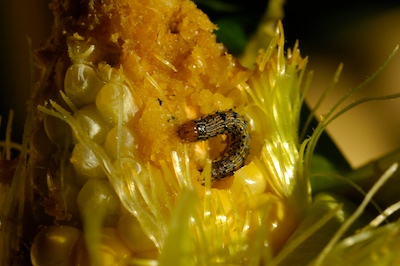
Pesticide resistant larvae feeding on sweet corn. The mere presence of this larvae on corn that received heavy applications of pesticides is evidence of genetic resistance and resurgence of an agricultural pest. In many ways, the use of pesticides initiates a treadmill in which the only solution is to increase the concentration and toxicity of pesticides. The outcome, however, is not to our benefit. Studies indicate that pesticide resistance results in losses that total at least $1.4 billion per year in the U.S. alone.*

pig.jpg


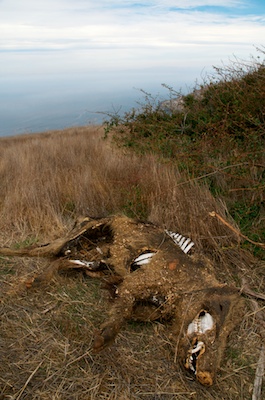
The remains of a feral pig on Santa Cruz Island, Channel Islands National Park, California. Pigs were introduced to Santa Cruz Island beginning in the 1850s and had negative impacts upon the native flora and fauna. A controversial pig eradication program was initiated in 2004 and completed by July 5th, 2006.

iguana.jpg


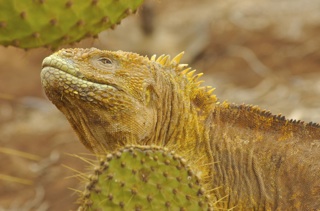
A male land iguana after a failed attempt to feed on the buds of an opuntia cactus. Although land iguanas are common throughout the Galapagos Islands, the colony on each island is unique due to the fact that each population is geographically isolated from the others. The regulations that protect the Galapagos Islands were developed with the intent of managing the area for the sake of the flora and fauna, many of which are found no where else in the world.

_DSC0066_2.jpg


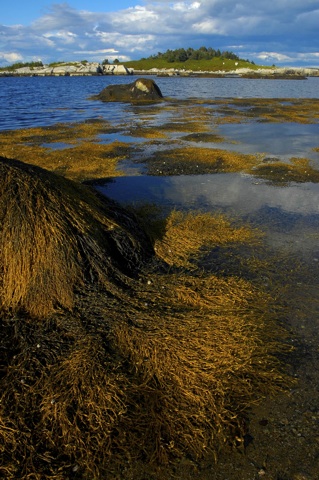
Low tide on Sal's Island, Nova Scotia

grace.jpg


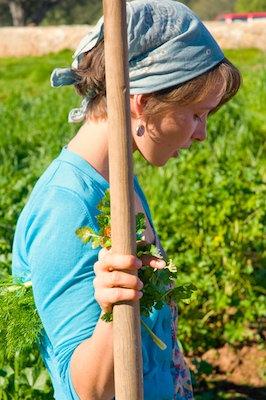
Grace Bueti tends to organic crops and serves as an education coordinator for Rio Gozo Farm in Ojai, California. The farm supplies produce to local schools and supports a community service program that trades produce for volunteer labor.

Thursday, December 13, 2007

Friday, November 16, 2007

Joshua Tree National Park

_DSC2776.jpg


_DSC2798.jpg
_DSC3386.jpg


_DSC3129.jpg


Climbers sometimes joke about the poor rock quality in Joshua Tree and fleets of RVs that flood the park, but I'll always jump at the chance to get lost in the Wonderland of Rocks, or to limp back to camp after a few bouts with some overhanging crack climb. The most compelling aspects of Joshua Tree, however, are the landscape and the unique flora and fauna. The rugged terrain and hardy vegetation speaks of tough ecosystem that with a little rain, and some exploration, shows itself in a mosaic of miniature Edens.

Saturday, October 6, 2007

California Coastline

_DSC4095.jpg
_DSC4078.jpg
DSC_0189.jpg
DSC_0226.jpg


November 12, 2007 - This evening I surfed alone near where I grew up as child and easily lost myself in the rhythms of catching waves and paddling through the backlit breakers. Subtle connections such as this are my primary motivation for being outside, but sometimes they catch me by surprise, as if some primordial being inside me is more cognoscint of them than my conscious self.

Despite this connection with the ocean, I have to admit to feeling somewhat unresolved as to how we, as humans, have influenced a place that in many ways is our lifeblood. We clearly love our coastlines, but like a pack of surfers scrambling for a single wave, we are dealing with a resource that is finite. And yet unlike a wave, the sea is sending us signals that all is not well.

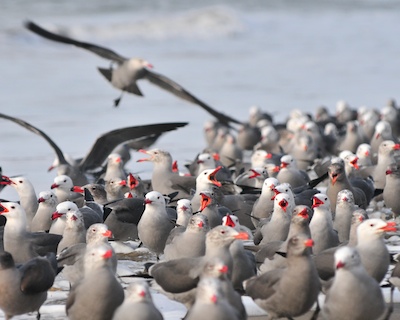
Consider the decline in marine species that were previously abundant, such as tuna and swordfish. Also troubling are the increased incidences of red tides, brought on by agricultural and domestic run-off that flows into creeks and tributaries and then instigate a "bloom" of growth along the coasts - a bloom that although essentially natural now occurs so frequently that it disrupts marine ecosystems (and tonight gave the water the look of amber ale). And perhaps worst of all are the offshore platforms, there because of our increasing demand for petroleum energy.

Of course, in many ways the same means that provided me with a childhood at the beach and the experience I have had in the ocean have been at a cost, whether it is due to my family's beach house or the gas that I burn to drive to the beach. I am a part of the problem. As I consider my role as an environmental photographer, and a soon to be father, I need to give back more than I take away.

Tuesday, September 11, 2007

Grand Canyon of the Tuolumne River

_DSC1519.jpg


_DSC1355.jpg


_DSC1808.jpg


As Yosemite Valley's sister valley, the Hetch-Hetchey Valley and Tuolumne River Gorge provides a glimpse of what the Yosemite may have looked like a century prior to the influx of paved roads and RVs. Perhaps most telling of the state of this valley was my companion's remark of how unusual it was to be hiking through a landscape of such beauty with so few named landmarks. Yet even our mark as a species is felt in this canyon; where Hetch-Hetchy Dam blocks the Tuolumne River a reservoir has back filled the canyon to just below Pate Valley (seen in the image second from the left). John Muir fought the construction of the dam in his later years, but was unable to dissuade the politicians - San Fransisco's thirst represented a greater need.

Nonetheless, this valley remains as a reward for those willing to work to get there. Even during the fall, when the series of waterfalls below Glen Aulin have lost some of their punch, the inky-black pools worn into the granite and the alpenglow on the towering cliffs are as they have been since long before John Muir first experienced them.

Wednesday, August 15, 2007

California Agriculture

_DSC0658.jpg

The variety and abundance of food in California hits its peak in the summer. But at what cost? When shopping at farmer's markets, one is practically delighted to see worms and grubs on the fruit and vegetables - after all isn't the presence of bugs an indication that food is organic? Yet what if food that receives heavy application of pesticides still bears pests, as in the case with this ear of corn? (left hand image) The reality is that insects can develop resistance to pesticides. The war on pests is actually a treadmill; over time it will take more and more effort to go nowhere.

On the flip-side, even if one was adamant about the use of pesticides in order to maintain crop yields, the fact remains that food production requires pollinating insects and the nutrient cycling services provided by detritus feeders. Most pesticides, however, are broad spectrum, and kill all insects regardless of whether or not they are beneficial. In fact, the U.S. Fish and Wildlife Service reports that one-fifth of beneficial honeybees colonies, along with 67 million birds, are killed each year due to pesticide exposure. This results in a scenario which requires even more time and energy to correct.

The answer seems not to be in attempting to eradicate pests, which develop resistance to the chemicals we throw at them, but rather in modeling healthy ecosystems using a method known as Integrated Pest Management. With IPM, both beneficial and detrimental insects exist in the field, but a balance is achieved that still provides abundant harvests. We also avoid forcing future generations to develop increasingly toxic pesticides and from bearing the responsibility for rehabilitating degraded ecosystems.

Wednesday, May 30, 2007

The Piolet

_DSC9132.jpgThe humble piolet takes a beating, but is unfailingly resolute in its duty. When arresting a falling climber, anchoring the rope in a boot-axe belay, or interned as a deadman, it serves without complaint. To see one in the hands of an experienced mountaineer is to see beyond its Neolithic appearance. Smoke Blanchard comes to mind, leaping, balancing and clambering through the Sierra with his long-shafted mountain axe; in his hands it was more than a snow-bound device.

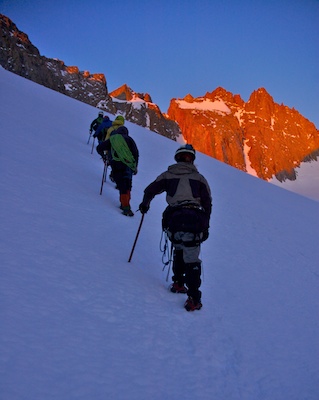
At the moment, however, the ice axe is little more than an awkward accoutrement to my students as we transition from snow to rock, and back to snow on an ascent in the Palisades. It is constantly in their way unless the going is straightforward -- always occupying the hand they would otherwise use to clutch the rock for balance -- and all too often I have to remind them to return the axe to their uphill hands. Given that their piolets seem intent on casting them off-balance, and the novelty of the axe’s resemblance to medieval weaponry wore off several days ago, my students want to abandon them. I eventually strap their axes in a tight bundle to my pack, reasoning that I am already asking enough of them in braving the thin air and frigid belays.

Resurrected as a prop for our summit photographs, the axe’s function is unmistakable on a choppy, bum-bruising glissade down the “L” couloir. We pick our way down through the piles of rocks to the top of the glacier for a final glissade, but a student narrowly knocks off a block when the spike of his axe jams in a crack and he wrenches it out in frustration. These kids are tired, and I can see their patience towards these hunks of metal has worn thin. Moments such as these, when fatigue has worn away false precepts, are ripe for learning, so I strike, delivering an impromptu lesson on a gravel-strewn ledge of a classroom.

“Here, see how the pick jams in this tiny crack? Or how it serves as a long arm for this reach-across . . .?”

I continue with a reference to Michael Jordan, who as a young man was rumored to bounce a basketball wherever he went, eventually making it a natural extension of his body.

“The piolet is the most functional of tools at this level – you want to feel so comfortable with it that it’s as if there is no tool, only you.”

All I see in response are blank stares. It would be better for us just to get down.

I don’t blame them; openness and connection between mind, body and the landscape can seem a little too far-out for the unitiated. The next morning, however, they leave camp with their ice axes in hand, while mine is on my pack.

It has been 14 years since the first time I took students into the mountains, but they still surprise me in the ways they learn--sometimes with such subtlety and expressionless-ness that you never know if you’ve reached them until they surprise you at some moment by exceeding your instruction.

They no longer seem to notice the piolets in their hands as we descend into the aspen grove at Cienega Mirth, but I notice. I see the ease of their grip and the confidence of their stride; they are proud of their ascent – wearing their scrapes and bruises and piolets like badges. I see them as the next generation of Palisade climbers and wonder if Smoke would see it that way too.